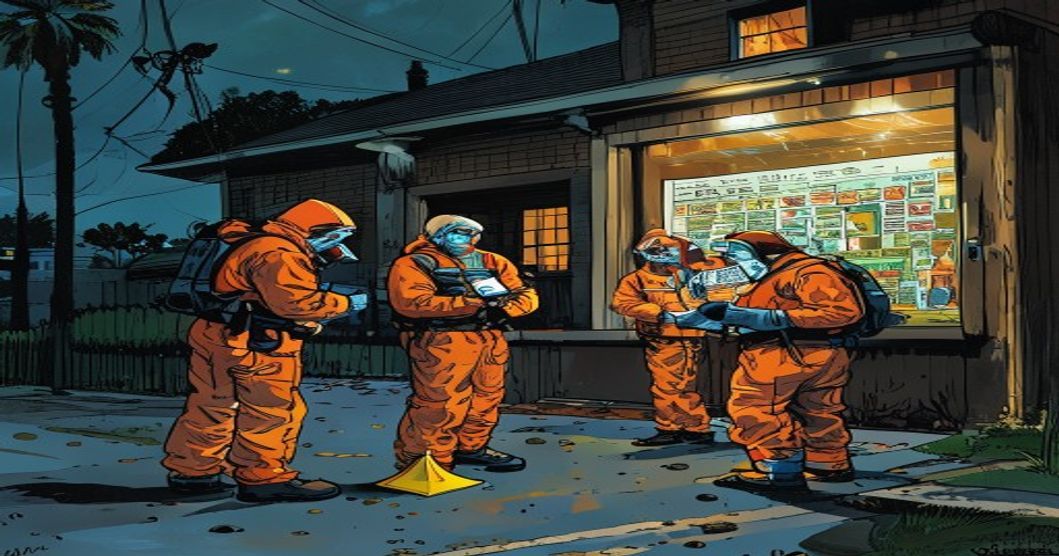
BREAKING: EPA Declares Former Poker In The Wood Host House a Level-4 Biological Hazard
SONORA, CA (NutGas News Investigative Bureau) — In a finding that scientists are calling “unprecedented,” the United States Environmental Protection Agency has quietly classified a former Poker In The Wood host home as a Level-4 Biological Atmosphere Anomaly Site — the agency’s highest classification for residential properties affected by what officials are calling Sustained Chronic NutGas Emission Events.
The home belonged to Jim and Crystal DeBeck. They are wonderful people. They hosted the league for years. They opened every window in the house every single tournament for reasons that were, at the time, unclear. Those reasons are now clear.
Chapter One: The Founding Home
Before Bish became the long-term host. Before Jason and Sheilia. Before Billy and Bev. Before Mick and Kimmie. There was the DeBeck residence.
Jim and Crystal opened their home to the Flock of Donkeys in the early years of the league. The DeBeck home was warm, welcoming, and, for several years, perfectly structurally sound.
“We loved having everyone over,” Crystal said, speaking through a screen door at her current address. “It was genuinely wonderful. We made great memories. The house was fine when we sold it.”
Jim was outside on the deck. Crystal says he gets a headache when this topic comes up. The NutGas News medical desk has categorized this as a potentially related symptom.
Chapter Two: The NutGas Begins
Marland joined the Flock in the early years and was immediately recognized as a steady, experienced player with a calm disposition, a sharp poker instinct, and what multiple witnesses have described as “a remarkable ability to clear a room.”
“I’ve never had a problem,” Marland said, speaking from across the table, upwind. “I genuinely don’t know what everyone is talking about. I have a normal digestive system.”
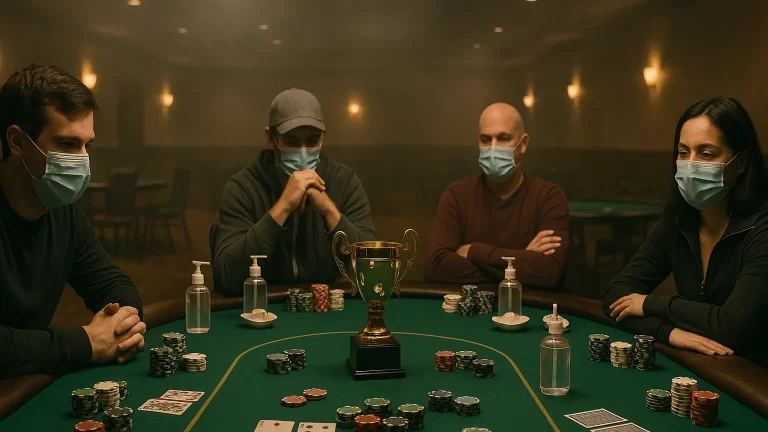
League records show the Flock’s window-opening protocol was introduced during the DeBeck era. The protocol evolved into a formalized pre-tournament ritual: opening all ground-floor windows prior to arrival, leaving the back door cracked at all times regardless of weather, and an informal understanding that certain seat assignments were “preferred” based on airflow mapping.
Jim kept a canary. Its name was Roger. Roger passed away in 2009. Three veterinarians noted that Roger’s position — directly between Marland’s seat and the nearest air return — was “notably relevant.”
“Roger was old,” Marland said. “I don’t know why everyone brings up Roger.”

Chapter Three: Eyewitness Accounts
Tim: “At some point we developed an informal seating rotation based on compass bearings. I don’t remember who suggested it. The math worked out.”
Billy: “I have a chart. Multiple charts. If you track the air currents relative to the tournament clock, Marland’s starting position, and the wind direction, you can calculate the optimal seat. I got it to a sixteen-variable equation by 2008. My results improved significantly.”
Bish: “The windows. Both of them, every time. And the back door. One time it was forty-three degrees outside. Windows were open. Nobody mentioned it. It was understood.”
Terry: “I asked Crystal once why they always opened the windows. She looked at me and said, ‘Fresh air is important.’ Then she opened another window. End of conversation.”
Don: “The NutGas Era was simply part of the experience. You adapted. You breathed through your mouth. You played poker. You went home. It built character.”
Gary: “I sat wherever they told me. I lost anyway. I still think about Roger.”
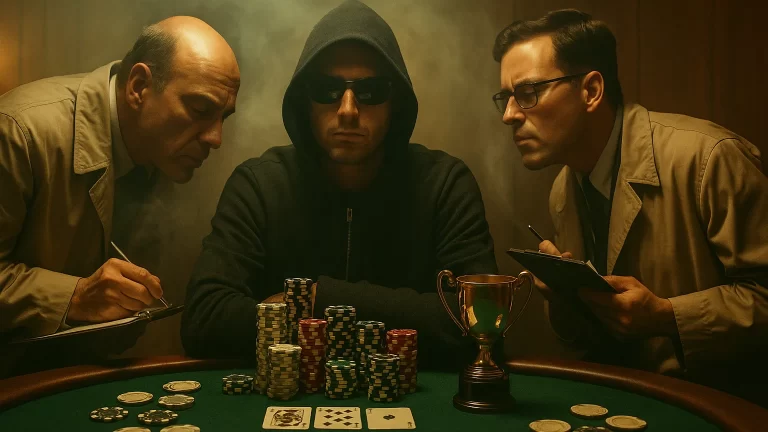
Jordan: “I ran the numbers on air quality correlation and tournament performance. There was a statistically significant relationship between proximity to Marland and chip stack degradation. I presented my findings to the table. Nobody was surprised. Marland was not present for that meeting.”
Marcel: “I did not speak much. I was paying attention to the cards and the air currents. Both required focus.”
Mark: “The carbon monoxide detector would occasionally go off. Crystal would wave at it with a dish towel. It would stop. We agreed it was a false alarm. Every time. By consensus. The detector was eventually moved to the garage.”

Chapter Four: Official Documents
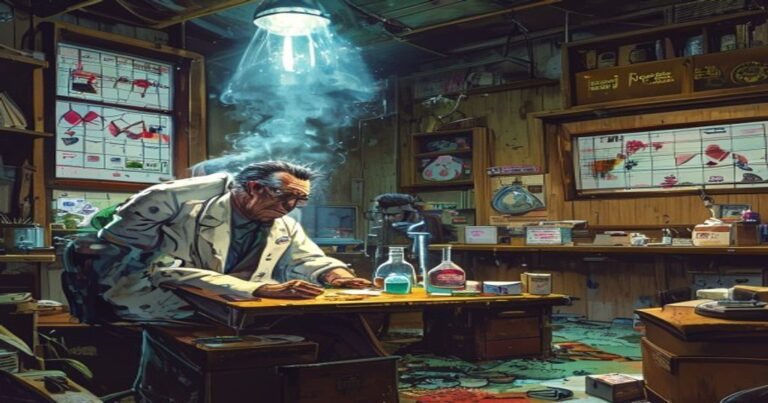
HVAC REPAIR — DeBeck Residence, 2011: Filters saturated beyond laboratory classification. Unit exhibiting resignation. Compressor exhibiting withdrawal behavior when powered down. RECOMMENDATION: Replace system. Technician declines to return. Invoice final.
NASA OBSERVATION, 2013: Anomalous atmospheric signature, Tuolumne County, CA. Recurring bi-weekly plume does not match agricultural, industrial, or geological sources. Classified TBDI. Analyst transferred at own request.
Chapter Five: The Seating Wind Sock Protocol
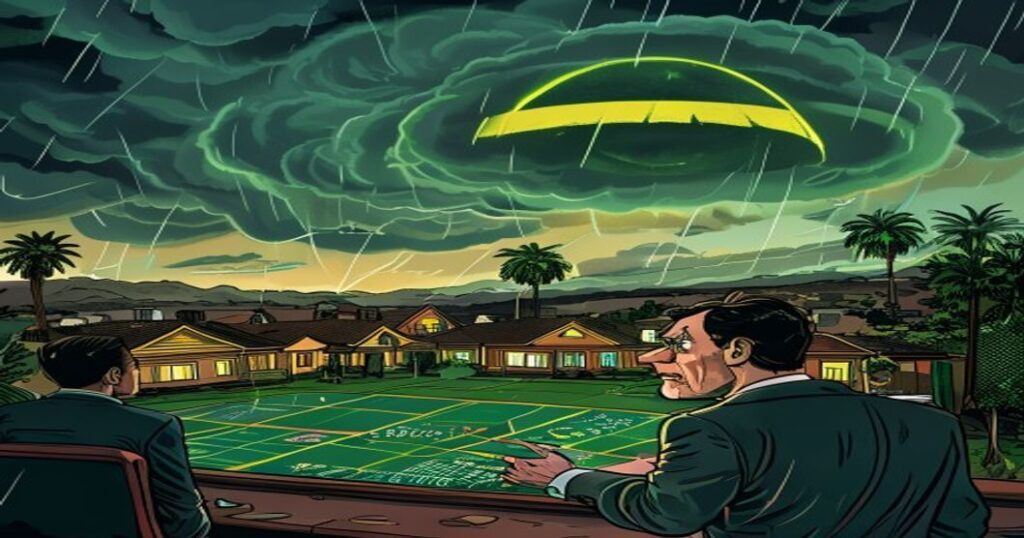
By 2010, the league had developed what Tim described as “a reasonably rigorous environmental risk mitigation framework,” and what other members called “the thing where we check the wind before sitting down.”
Protocol: (1) First player assesses air quality on entry. (2) Selects seat with best wind vector relative to Marland’s expected position. (3) Subsequent players repeat independently. (4) Last player takes whatever chair remains, downwind, and accepts this stoically. (5) Marland sits wherever directed and asks why everyone is taking so long.
Crystal eventually purchased a weather vane for the back porch. She has declined to explain why.

Chapter Six: The EPA Classification
The EPA’s Level-4 Biological Atmosphere Anomaly Site classification was issued quietly last spring. The agency declined to comment. A spokesperson said only: “We are aware of the property,” then asked how we got this number.
Current owners of the property must maintain enhanced ventilation systems, file quarterly atmospheric reports, and disclose the home’s history in any future real estate transactions under the California “Flatulence-Related Environmental Disclosure” statute, which was created specifically for this situation.
Marland was informed of the EPA classification. He was quiet for a long time.
“I don’t understand what I’m being accused of,” he said. “I don’t have a Level-4 digestive system. That is not a real thing.”
He is correct that it is not a real thing. The EPA created that classification specifically for this property.
Epilogue: The Friendships Remain
The DeBeck home is gone from the league’s hosting rotation. The Flock moved on. Bish has been the long-term host for years, maintaining a clean game room that has passed all atmospheric inspections, though he has quietly invested in an industrial-grade air purification system he describes as “a lifestyle choice.”
Crystal DeBeck, asked if she has regrets, was quiet.
“None,” she said. “Those were wonderful years. The friendships are real. The poker was terrible but the company was excellent. We’d do it again.” She paused. “Not at that house. Somewhere. With better windows.”
The Flock of Donkeys has been playing together for over twenty years. They have moved from house to house, through bad beats and good times and a lot of pizza that should not have been reheated in the box. They have kept coming back.
That is the thing about the Flock. The game could be played anywhere. The friendship is the whole point.
Even if “anywhere” was, for several memorable years, a house that the EPA now requires a hard hat to enter.
Related: Lore Archive · League History · NutGas News
⚠️ League Safety Warning:
Do not reheat pizza in the cardboard box in the oven.
The committee has already learned this lesson once.